
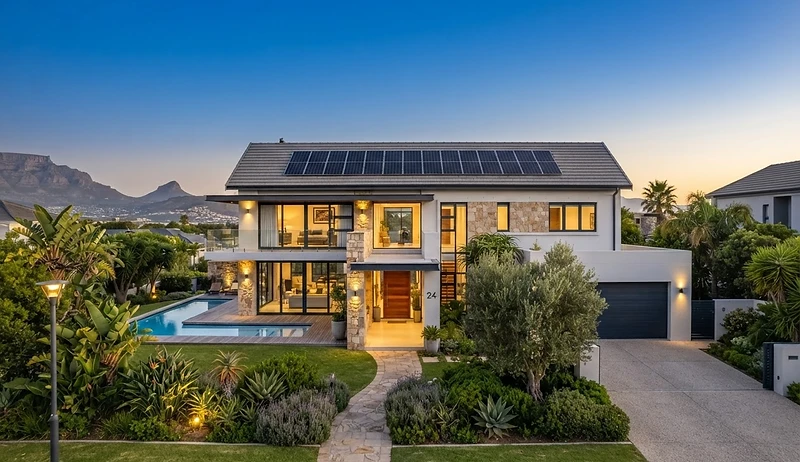
Residential Solar Installation in Witbank
Solar, inverter and battery installations for Witbank households — designed from your actual consumption and the circuits that matter most to you.
Household consumption in Witbank tends to peak in the early morning and again in the evening, which is exactly when solar production is lowest. That pattern is the single most important factor in a residential design, and it is why so many homes end up with a hybrid system rather than panels alone.
We start by walking your distribution board with you. Lighting, plugs, connectivity and refrigeration usually go onto backup first. High-draw resistive loads — geysers, ovens, underfloor heating — are handled differently, often through timers or by leaving them on grid supply, because covering them with storage is expensive and rarely necessary.
From there we measure available roof area, check orientation and shading, and size the array against your consumption rather than against a package. The proposal you receive lists the panel count, inverter, battery capacity, installation scope and any optional upgrades separately, so you can see exactly what you are buying.
Many households install in phases: backup first, panels second, extra battery capacity later. That works well provided the inverter chosen at the start has the headroom to accommodate it — which is a decision we make on day one, not on day three hundred.
- Homes
- Townhouses
- Complexes
- Estates
- Small residential properties
What Residential Solar Covers
Solar power for daytime use
Panels sized to cover the consumption that happens while the sun is up — geysers on timers, pool pumps, appliances and daytime work-from-home load.
Battery backup
Storage for the circuits you refuse to lose during an outage, with capacity calculated from your own load list.
Hybrid systems
Solar, grid and battery managed by one inverter, with automatic changeover when the grid drops.
Essential load systems
A dedicated backup board carrying lighting, plugs, connectivity and refrigeration on modest capacity.
System upgrades
Added panels, extra battery modules or a larger inverter on compatible existing installations.
Future expansion
Inverter and cabling specified with headroom now, so the next phase does not mean redoing the first.
Residential Solar Quote Request
Book a Home Solar Assessment
Tell us about your property and what you need the system to do. We will assess it and send a written, itemised proposal.